Robot News

Editor Picks

Ground robots teaming with soldiers in the battlefield -
UGV - Unmanned Ground Vehicle

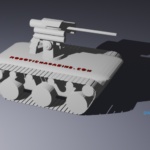
Modern militaries are steadily integrating ground robots—often called robotic combat vehicles (RCVs) or autonomous ground systems (AGS)—as force multipliers that enhance the reach, endurance, and situational awareness of human units. These platforms handle hazardous or burdensome tasks, allowing squads and platoons to operate more safely and focus on mission execution. Ukraine’s extensive use of unmanned ground vehicles (UGVs), including the delivery of more than 150 Milrem THeMIS systems through a Dutch-led initiative, illustrates how rapidly these technologies are entering real conflict zones. Confirmed deployments indicate a steady expansion of robotic support on the battlefield. UGVs are particularly valuable for reconnaissance and threat detection in complex environments such as dense urban […] Read More

Shelf Scanning Robot – ShelfOptix -

Shelf Scanning Robot - ShelfOptix by Brain Corp

Shelf-scanning robots are autonomous systems designed to navigate store aisles, identify missing or misplaced products, and capture real-time inventory data with high accuracy. By using cameras, sensors, and intelligent software, these robots help retailers maintain on-shelf availability, reduce manual auditing work, and improve overall store efficiency. As automation continues to grow in the retail sector, shelf-scanning solutions are becoming essential tools for modern inventory management. Below is one of these robots from ShelfOptix – an AI-powered robotic shelf intelligence service created by Driveline Retail and Brain Corp. The robot autonomously navigates and scans shelves to capture “ground truth” visual data—real, on-shelf conditions such as product presence, quantities, and price labels—at […] Read More

PCB Board Design for Robotics Projects -

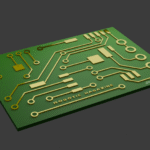
Designing your own PCB isn’t just about cutting costs — it’s about taking full control of your robot’s electronics. A custom board lets you integrate everything you need into one compact, reliable system, eliminating messy wiring and improving performance. While it can make your robot cheaper in the long run and if you mass produced it, the real advantage lies in precision, efficiency, and scalability. By designing your own PCB, you’re not only building smarter hardware, but also gaining deeper understanding of your robot’s electrical backbone and creating a foundation for more professional, high-quality designs. The right board means having precise signal routing, long term stability, efficient power management.Knowing the […] Read More

Figure AI shows latest robot – Figure 03 -

Figure AI has just introduced its latest android robot, Figure 03. The new robot comes with a lot of improvements over the previous one, such as, redesigned hands including softer fingertips with improved grasp and new cameras in hands, wireless charging through electromagnetic induction, faster actuators with improved torque density, improved audio system, improved camera and visual perception capabilities, battery safety advancements, among others. About manufacturing, the company says that they established a new supply chain and revised their manufacturing process which included the company’s high volume production facility BotQ, in order to be able to mass produce the robot. Figure 03 is not only better but will also cost […] Read More

Robotic Workcell Design with Cloud-Based Optimization -

Two of the most critical success factors in the manufacturing industry are time to deployment and cycle time. Despite this, the design and deployment of robotic workcells has long remained a surprisingly manual and time-consuming process. Realtime Robotics is aiming to change that with Resolver, a cloud-based optimization engine that introduces industrial-scale automation into the earliest stages of robotic system planning. At its core, Resolver addresses some of the most persistent engineering challenges in workcell design: motion planning, robot task allocation, target sequence optimization, and layout validation. Traditionally, these steps require iterative tweaking, deep domain expertise, and a significant investment of time and resources to get right and be able […] Read More

Crop Weed Control Robot -

Weed that grow among crops is a problem in many ways since humanity started agriculture. Weeds compete with crops for water, soil nutrients, sunlight. They can host pets, harbor diseases. They cost labor to remove them, either manually or chemically. This also increases overall costs and chemical removal may mean environmental impacts. Overall, weeds cause lower crop yield, decrease in quality, and higher costs. Considering all these, it is a very critical task, to remove them as efficiently as possible, which is where robots can be very useful and bring the costs down. A robot that is developed in Spain, which is called “The GreenBot” aims to undertake such task. […] Read More

Advanced Robotic Platforms from Deep Robotics -

DEEP Robotics develops a range of advanced robotic platforms, each designed for specific real-world applications across industrial, public service, and research sectors. Lite3 is an agile quadruped platform ideal for education, research, and light industrial tasks, offering versatility for developing AI and robotics solutions.Lite3 supports open source, users can develop advanced perception capabilities such as autonomous navigation, automatic obstacle avoidance, visual localization, environment reconstruction, customizable API for robotics development and AI training Image credit: Deep Robotics – deeprobotics.cn X30, a robust quadruped, is tailored for inspection, security, and autonomous navigation in hazardous environments such as industrial sites and power plants.X30 robot dog conducts autonomous inspection day and night in any […] Read More

How does a Battery work -

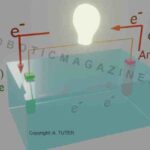
How does a Battery work - Copyright: A. TUTER

A battery works on the basic principle that electrons tend to move from where they are abundant, or in excess, to where they are scarce. This can happen, if there is a medium that will allow the movement of these electrons. The part of battery with too many electrons is called the anode which means it is the negative electrode (remember, the charge of an electron is negative). The part of the battery where electrons are scarce is called the cathode, which means it is the positive electrode, which means, there is net positive charge there. Let’s present Anode and Cathode characteristics as lists, to make things more understandable: Anode:• […] Read More

Pipe mapping and repairing robot of CMU -

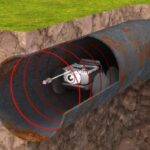
Carnegie Mellon University Robotics Institute Researchers have developed a robot that can crawl inside natural gas pipelines to map them, while also detecting and repairing their leaks when necessary. The research project, which is near completion, was sponsored by the U.S. Department of Energy (DOE) through the Advanced Research Projects Agency-Energy (ARPA-E) and its Rapid Encapsulation of Pipelines Avoiding Intensive Replacement (REPAIR) program. Upon its application, use of this system will drastically reduce the costs of pipeline leak detection and leak repair processes.  The repair is made by the robot applying resin coating from inside, to seal the crack and can be applied for pipes of any material. The robot […] Read More