
Robotics News, Knowledge & Insight since 2008

Parts > Power Management & Batteries

How does a Battery work -
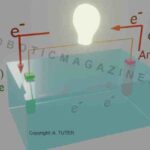
How does a Battery work - Copyright: A. TUTER

A battery works on the basic principle that electrons tend to move from where they are abundant, or in excess, to where they are scarce. This can happen, if there is a medium that will allow the movement of these electrons. The part of battery with too many electrons is called the anode which means it is the negative electrode (remember, the charge of an electron is negative). The part of the battery where electrons are scarce is called the cathode, which means it is the positive electrode, which means, there is net positive charge there. Let’s present Anode and Cathode characteristics as lists, to make things more understandable: Anode:• […] Read More

Batteries for Drones -

Batteries provide essential power to the motors, receivers and controllers. For multirotors, the most commonly used batteries are Lithium Polymer (LiPo) types, as their energy efficiency is high. Usually 3-4 cell batteries are used, which provide currents of up to around 5000 mah (miliamperes – hour) capacity. To understand what mah means, consider this example: a 3000 mah battery will last 3 times longer than a 1000 mah battery.  Think of the charge (or load) in Amperes and time as similar to velocity and time. Velocity x time = distance. Here the distance is mah, so in other words, it is the distance you can go for so many hours […] Read More

Better fuel cells might be on the way -

One of the main obstacles in front of robots being widely used in our everyday lives is to provide mobility for longer durations with less weight and fewer recharge requirements. The solution seems to be the developing fuel cell technology, however the current state does not yet allow us to use these in everyday practical aplications. The main hinderance factor so far is the cost of production, such as using platinum, a very expensive material have to be utilized in order to produce these cells. A recent finding by chemists at University of Calgary, may be the solution for using cheaper materials in the future. The chemists dicovered a new […] Read More