Robotics News, Knowledge & Insight since 2008

Electronics

PCB Board Design for Robotics Projects -
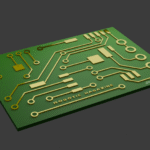
Designing your own PCB isn’t just about cutting costs — it’s about taking full control of your robot’s electronics. A custom board lets you integrate everything you need into one compact, reliable system, eliminating messy wiring and improving performance. While it can make your robot cheaper in the long run and if you mass produced it, the real advantage lies in precision, efficiency, and scalability. By designing your own PCB, you’re not only building smarter hardware, but also gaining deeper understanding of your robot’s electrical backbone and creating a foundation for more professional, high-quality designs. The right board means having precise signal routing, long term stability, efficient power management.Knowing the […] Read More

How does a Battery work -

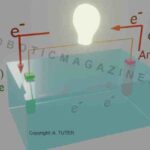
How does a Battery work - Copyright: A. TUTER

A battery works on the basic principle that electrons tend to move from where they are abundant, or in excess, to where they are scarce. This can happen, if there is a medium that will allow the movement of these electrons. The part of battery with too many electrons is called the anode which means it is the negative electrode (remember, the charge of an electron is negative). The part of the battery where electrons are scarce is called the cathode, which means it is the positive electrode, which means, there is net positive charge there. Let’s present Anode and Cathode characteristics as lists, to make things more understandable: Anode:• […] Read More

Power Management in Electrical Circuits -

Effective power management is essential for effectively distribute, store and control power in electrical circuits of any size and purpose. By this, energy waste is reduced, and components within the circuit are also protected from being exposed to overcurrent and getting overheated. Our attention as always are not macro power systems but micro systems such as in robotics, computers and small electronic devices. Let’s list certain components and aspects of power management. Voltage Regulators: Obviously the most fundamental components of a circuit to manage proper power distribution are voltage regulators. These provide necessary voltage as needed in a circuit. Voltage regulators are of different types. Power rails: It is a […] Read More

What is an Inverter and How does it work -

An inverter is a device to change DC current to AC. It can be used for example to run devices during electric outages or remote areas without electrical service. For example at a remote area if you have solar panel to supply electricity, it would be a DC voltage. You need an inverter to modify this current to an AC current, to power your tools, devices, appliances or equipment, most of which are made to run on AC current, due to its inherent efficiency over DC current when transmitting electricity to power or homes, offices and factories. An inverter changes the DC current direction, to match the sinusoidal waveform and […] Read More

Electrical Circuit -

An electrical circuit is a loop which provides a path for electric current (electric charge) to flow. This loop must be closed. In other words, the current must be able to flow from positive to negative terminals otherwise the flow will not take place. The charge is made possible by a source such as a battery which motivates the electrons to move in the conductor. So it is the movement, in other words the flow of these electrons that constitutes the electrical charge. Note that this happens from negative to positive terminal which is the opposite of accepted convention for current direction. In this closed loop we mentioned above, there […] Read More

Conductors, Insulators, Semiconductors -

Conductors: Conductors are the materials that easily allow flow of electric current upon application of voltage, such as copper. Conductivity is the measure of how easily current will flow through that material and shown by the symbol σ (sigma). Its unit is Siemens / meter (S/m) but usually milliSiemens / meter is used. It is a characteristic property a material. In other words, it is not affected by the geometry or size of material. Insulators: Insulators are the materials that do not allow or very hardly allow the flow of electrical current upon application of voltage. Example: Glass. Resistivity is the exact opposite of conductivity and shown by the symbol […] Read More

Sensors and Transducers -

Sensors and transducers can sometimes be confused because they both react to some change in their environment but they are not the same thing. SENSOR A sensor is a component in an electronic system that can detect (sense) various types of changes in the physical environment and as a result, communicate these to the bigger system it is a part of. In other words they do the same job as what our 5 senses do for us. A sensor can measure how much the change occurs and transmits this information in a convenient format  such as electrical signals to the system. The change can be about any physical quality that […] Read More

Analog vs. Digital Electronics -

We can look at electronics in two different ways, both of which have different uses, which are analog vs. digital electronics. In short, analog electronics deals with continuous, smoothly varying signals, and digital electronics is about handling discrete signals (which are either on or off or in other words, 1 or 0). ANALOG ELECTRONİCS In general sense, analog means something that is comparable to / similar to something else that can continuously vary. This varying thing can be anything such as temperature, pressure, position, voltage… So in analog electronics, the signals can be represented by varying voltage or current levels proportional to the signal. The physical quantity is converted to […] Read More