Robotics News, Knowledge & Insight since 2008

Parts

New Encoder Display from US Digital -

Encoder Display Screen by US Digital

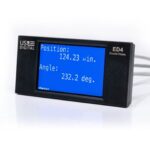
Encoders are sensors that measure physical movement—such as the rotation of a motor—and convert it into electrical signals. This allows us to determine how much a motor has rotated and use that information as digital input in a robot’s control system. They are essential for achieving precise motion control, especially in applications that require accurate positioning or speed regulation. Robots rely on encoders to ensure smooth movement, feedback, and reliable automation. The press release below is by US Digital, about their new encoder display. US Digital’s New ED4 Digital Encoder Display Vancouver, Washington – November 19, 2025. US Digital announced today the release of our new ED4 Encoder Display. Encoder […] Read More

Main Components of a Humanoid Robot -

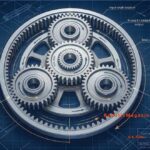
A humanoid robot has several main systems working together which are: Sensors: Cameras, microphones, tactile sensors, motion sensors and more…. AI: Through artificial intelligence, decision making, computer vision, navigation, motion planning, interactions with surroundings and all other systems are coordinated and managed. Power Supply and Management Systems: Optimization of energy usage and efficient usage of available power is one of the main goals. Actuation Systems: Presently rotating electric actuators are the main means of actuation in all advanced humanoid robots. Research is also underway for more humanlike, tendon based actuation systems. Control Systems: Control system can be considered as a middle connection between the AI and all other systems, which […] Read More

How does a Battery work -

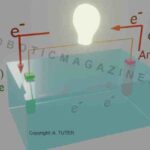
How does a Battery work - Copyright: A. TUTER

A battery works on the basic principle that electrons tend to move from where they are abundant, or in excess, to where they are scarce. This can happen, if there is a medium that will allow the movement of these electrons. The part of battery with too many electrons is called the anode which means it is the negative electrode (remember, the charge of an electron is negative). The part of the battery where electrons are scarce is called the cathode, which means it is the positive electrode, which means, there is net positive charge there. Let’s present Anode and Cathode characteristics as lists, to make things more understandable: Anode:• […] Read More

Robot Actuation Systems -

Actuation in robotics means the systems that enable physical movement. The most common ways of actuation are by electric motors, pneumatic and hydraulic systems, which we will introduce below. But note that there are other actuation systems as well, achieved by shape memory alloys, piezoelectric action, electromagnetism, movement achieved through thermal properties of materials and more. Now let’s take a closer look at Electric motor, Pneumatic and Hydraulic actuation.  Electric Motor Actuation:  This is the most common way, where, movement is achieved by electric motors, which can run on AC or DC power.  Electric motors offer a high degree of precision and motion control and may be used for almost […] Read More

OptoForce Industrial Robot Sensors -

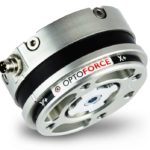
OptoForce Sensors Providing Industrial Robots with a “Sense of Touch” to Advance Manufacturing Automation   Global efforts to expand the capabilities of industrial robots are on the rise, as the demand from manufacturing companies to strengthen their operations and improve performance grows. Hungary-based OptoForce, with a North American office in Charlotte, North Carolina, is one company that continues to support organizations with new robotic capabilities, as evidenced by its several new applications released in 2017. The company, a leading robotics technology provider of multi-axis force and torque sensors, delivers 6 degrees of freedom force and torque measurement for industrial automation, and provides sensors for most of the currently-used industrial robots. […] Read More

FT 300 force torque sensor -

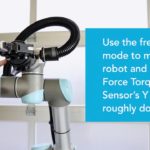
Robotiq Updates FT 300 Sensitivity For High Precision Tasks With Universal Robots Force Torque Sensor feeds data to Universal Robots force mode Quebec City, Canada, November 13, 2017 – Robotiq launches a 10 times more sensitive version of its FT 300 Force Torque Sensor. With Plug + Play integration on all Universal Robots, the FT 300 performs highly repeatable precision force control tasks such as finishing, product testing, assembly and precise part insertion. This force torque sensor comes with an updated free URCap software able to feed data to the Universal Robots Force Mode. “This new feature allows the user to perform precise force insertion assembly and many finishing applications […] Read More

Inertial-Grade MEMS Capacitive Accelerometers -

Press Release by Silicon Designs: Silicon Designs Introduces Inertial-Grade MEMS Capacitive Accelerometers with Internal Temperature Sensor and Improved Low-Noise Performance  Five Full Standard G-Ranges from ±2 g to ±50 g Now Available for Immediate Customer Shipment November 9, 2017, Kirkland, Washington, USA – Silicon Designs, Inc. (www.SiliconDesigns.com), a 100% veteran owned, U.S. based leading designer and manufacturer of highly rugged MEMS capacitive accelerometer chips and modules, today announced the immediate availability of its Model 1525 Series, a family of commercial and inertial-grade MEMS capacitive accelerometers, offering industry-best-in-class low-noise performance. Design of the Model 1525 Series incorporates Silicon Designs’ own high-performance MEMS variable capacitive sense element, along with a ±4.0V differential analog output stage, internal […] Read More

Batteries for Drones -

Batteries provide essential power to the motors, receivers and controllers. For multirotors, the most commonly used batteries are Lithium Polymer (LiPo) types, as their energy efficiency is high. Usually 3-4 cell batteries are used, which provide currents of up to around 5000 mah (miliamperes – hour) capacity. To understand what mah means, consider this example: a 3000 mah battery will last 3 times longer than a 1000 mah battery.  Think of the charge (or load) in Amperes and time as similar to velocity and time. Velocity x time = distance. Here the distance is mah, so in other words, it is the distance you can go for so many hours […] Read More

What is an Airspeed Sensor -

It measures the speed of the drone relative to the air, by measuring the positive and negative pressure differences around the drone. When purchased, they usually come together with pitot tube and connection cables. It is recommended for advanced users or drones only, as it necessitates an extra layer of control and tuning. Through pitot tube, the pressure is measured and then this is converted to air speed. Air speed varies with the square root of air pressure. The pitot tube, which takes in the air, transmits it to the sensor through rubber tubing. The sensor is connected to flight controller through a 4 wire I2C cable. Air speed of […] Read More

What is an accelerometer? -

An accelerometer is an electromechanical device, a sensor, that measures acceleration both horizontally in both horizontal axis due to speed, slow down, or high G turns, and vertically due to gravity and lift up or down. For example, accelerometer and gyroscope sensors are often combined in one sensor called Inertial Measurement unit and connected to flight controller of a drone and enable stable flight.  Also see Inertial Navigation System, INS. Ask, discuss anything about robots and drones in our forums See our Robot Book This post was originally written by RoboticMagazine.com and displaying without our permission is not allowed.   Read More