Robotics News, Knowledge & Insight since 2008

Parts > Sensors > Tactile & Environmental

OptoForce Industrial Robot Sensors -
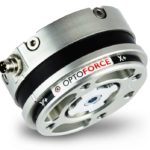
OptoForce Sensors Providing Industrial Robots with a “Sense of Touch” to Advance Manufacturing Automation   Global efforts to expand the capabilities of industrial robots are on the rise, as the demand from manufacturing companies to strengthen their operations and improve performance grows. Hungary-based OptoForce, with a North American office in Charlotte, North Carolina, is one company that continues to support organizations with new robotic capabilities, as evidenced by its several new applications released in 2017. The company, a leading robotics technology provider of multi-axis force and torque sensors, delivers 6 degrees of freedom force and torque measurement for industrial automation, and provides sensors for most of the currently-used industrial robots. […] Read More

FT 300 force torque sensor -

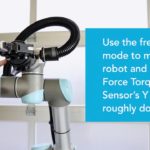
Robotiq Updates FT 300 Sensitivity For High Precision Tasks With Universal Robots Force Torque Sensor feeds data to Universal Robots force mode Quebec City, Canada, November 13, 2017 – Robotiq launches a 10 times more sensitive version of its FT 300 Force Torque Sensor. With Plug + Play integration on all Universal Robots, the FT 300 performs highly repeatable precision force control tasks such as finishing, product testing, assembly and precise part insertion. This force torque sensor comes with an updated free URCap software able to feed data to the Universal Robots Force Mode. “This new feature allows the user to perform precise force insertion assembly and many finishing applications […] Read More

Stereoscopic Depth Sensor -

About one year ago, Nerian Vision Technologies introduced the SP1 stereo vision system, which is an innovative sensor solution for 3D depth perception. The SP1 is an embedded system that connects to two industrial cameras, which are placed at different viewing positions. Similar to human vision, the SP1 is able to infer the depth of the 3D scene, by comparing the images from both cameras. This system is based on a programmable logic device, a so-called FPGA, which provides the necessary processing power to perform all image processing in real time. This hardware-based design lends itself to massively parallel computations, which lead to a vast performance gain when compared to […] Read More