Robotics News, Knowledge & Insight since 2008

Androids

Nice moves from japanese humanoid robot -

Robid, a new humanoid robot developed by Tomatoka Takashi of Robo Garage, a japanese company, is able to perform moves that are pretty good for its size… The robot weighs 1.6 kilograms (3.5 lbs) and its height is 38 cm (15 inches). The frame is made of carbon and plastic and it has 30 degrees of freedom which is very good for a robot at that size. Among the robot’s abilities, are to jump about 8 cm in the air and voice recognition (though it is limited to less than 10 words so far). The robot is still in the prototype stage with no word for the production release yet. […] Read More

Robot walking like human -

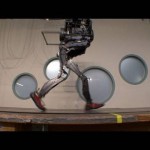
After the Big Dog robot, a four legged technology marvel which mimicked the natural walking mechanism of a four legged animal, the US based robotics company called Boston Dynamics has now developed a two legged version of the robot, and this one seems to imitate walking of a human. The bipedal robot called Petman, has primarily been developed for the US army, to test military suits, and it is able to crawl and perspire through artificial glands, in addition to walking, to simulate real life conditions. At Robotic Magazine we had published the news of this robot while it was in development a few months ago. See that news entry […] Read More

Robovie-PC Humanoid Robot -

Japanese company Vstone has just unveiled a new humanoid robot called Robovie-PC, which has PC equivalent controls inside the body. The robot goes for around $4,500 in the US, with 20 degrees of freedom, a built in camera, USB connections and a gyrosensor. The robot may be considered a high end humanoid robot in its category due to its mehcnaical abilities as well as controllers. Visit company website here. Reference: vstone.co.jp Read More

Progressing with artificial hands -

Making a working artificial hand has always been a great challenge in medicine. Even until now, most amputees without arms have to make use of hooks in place of their hands. Recently however, technology seems to get close to making a really functioning artificial hand. The artificial arm is called the DEKA arm, which is part of a $100 million Pentagon program under the direction of DARPA (Defense Advance Research Project Agency). There are over 300 scientists working on the job, which involves engineers, neuroscientists and physchologists. The broad reqirements of the project is to produce an artificial arm which is able to graps tiny and soft objects such as […] Read More

Bionic Leg to enable natural use -

The artificial leg developed by an Iceland based company called OSSUR, can learn the users walking gait and then adjust itself accordingly. Not only that, but the leg is also able to give the user enough strength so that the natural walking motion is not interrupted as in ordinary artificial legs. The future of this technology is of course the artificial leg providing the user a better than normal strength and speed. For more visit the blog and video at singularity hub website. Read More

A very real humanoid robot -

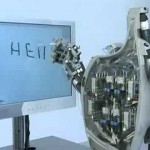
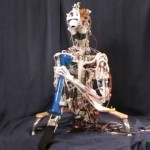
The european humanoid robot research project called Eccerobot, which stands for “Embodied Cognition in a Compliantly Engineered Robot” aims to mimic the human anatomy in a humanoid robot more than any of its kind before. The project is run by University of Munich and has several European partners and supporters. By making a design that mimics human body, which is called a “Anthropomimetic” design, a better way of researching human cognition and artificial intelligence can be achieved as well. After all, human cognition and thinkig is very closely related with the body’s senses and the input coming from the whole body. Robotics is not necessarily bound by the limits of […] Read More

Improved navigation for androids -

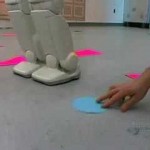
Autonomous navigation is one of the most challenging parts of building a robot and especially, if it is a humanoid robot you are dealing with, things easily get much more difficult. Of course, real world conditions involve changing environments as well. Researchers at Carnegie Mellon University, were able to come up with an algorithm that enables Honda’s famous humanoid robot Asimo to walk through a continuously changing set of obstacles. There is no doubt that doing this task is much more challenging than just navigating through a steady set of obstacles. The algorithm that the team came up with, called “the footstep planner”, calculates the “cost” of making each possible […] Read More

Toyota’s Android Robot breaks running speed record -

Making bipedal running motion is a challenging task. Engineers at Toyota achieved not only this but were able to break the speed record for a running bipedal robot. Another addition to the robots physical abilities is balance keeping, such as when pushed backwards, the robot regains it balance and straightens itself up back again. See video below… Read More

Very strong artificial muscles created -

At University of Texas Nanotech Institute, Scientists have created an artificial muscle that runs on alcohol and has the ability to generate strong forces in a short period of time. These muscles use chemical fuels instead of battery energy. The muscles use methanol, which has 30 times the energy storing capacity of a conventional battery. The nickel-titanum alloy coated in platinum particles, which are only nanometers wide, can generate 500 times more force than natural muscles of the same diameter. Currently, there are problems such as the time required to cool off the muscle faces, or the dislocation of the nanoparticles due to motion generated, which are being resolved be […] Read More

Robot learns facial expressions by itself -

The robot head developed at University of San Diego in California, uses self learning algorithms to improve the reality of its facial expressions.The robot has 30 servo motors each of which make up for a facial muscle, by controlling muscles with tiny strings. Without the use of machine learning, all of these muscles had to be calibrated manually by humans to move at the right combination. This process automates that process, and also more efficient in creating realistic looking expressions, as it developes naturally. In summary, the process involves having the robot make a facial expression and analyze the result in a mirror, and it compares the expression with the […] Read More