Robotics News, Knowledge & Insight since 2008

Robotics

I-Cub Robot -

The humanoid robot called I-Cub is a project based in several research institutions in europe, which aims to study human intelligence at the level of a baby child. Through realistic interaction with its environment, the researchers aim to develop algorithms that will enable autonomous intelligent reasoning abilities. One of the goals of the project is not just to study AI, but also to learn about […] Read More

Non-Silicon biological robot: Plasmobot -

Scientists at the University of West England in UK are working on designing a total biological robot without using any silicon parts, by utilizing the vegetative stage of slime mold. This is a common type of mold that can live in damp indoor or outdoor spaces. The research is based on the principle that the mold has computational capabilities, such as choosing the shortest path […] Read More

Jaemi – Hubo -

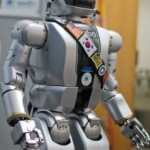
NAME: Jaemi HUBO CATEGORY: HUMANOID MADE BY: The project is a joint effort of researchers at Drexel University, the University of Pennsylvania, Colby College, Bryn Mawr College and Virginia Tech in the US, and Korea Advanced Institute of Science and Technology (KAIST), Korea University and Seoul National University in Korea. DESCRIPTION:  National Science Foundation press release describes the robot as: ”Jaemi HUBO embodies efforts to […] Read More

A very real humanoid robot -

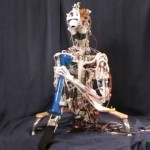
The european humanoid robot research project called Eccerobot, which stands for “Embodied Cognition in a Compliantly Engineered Robot” aims to mimic the human anatomy in a humanoid robot more than any of its kind before. The project is run by University of Munich and has several European partners and supporters. By making a design that mimics human body, which is called a “Anthropomimetic” design, a […] Read More

Robots evolve to deceive each other in experiment -

Neural Networks are one of the biggest tools that the AI researchers use. In summary, they enable natural learning of an artificial algorithm, in order to achieve an assigned goal. In a recent experiment done by French researchers, the goal was to have robots get closer to a food supply, which meant earning points, and keep away from a poisonous food supply, which meant loosing […] Read More

TYZX Announces iRobot’s Selection of TYZX 3D Vision Systems for Advanced Sensing on Military Robots -

TYZX Stereo Vision Provides Depth Perception to Help Unmanned Ground Vehicles (UGV) Avoid Obstacles and Manipulate Sensitive Objects MENLO PARK, August 10, 2009: TYZX, the 3D vision technology company, today announced that iRobot Corporation has chosen the TYZX DeepSea G2 Embedded Vision System (EVS) for several military robotics research projects requiring real-time vision and depth-perception. iRobot has demonstrated the ability to integrate the TYZX G2 […] Read More

Improved navigation for androids -

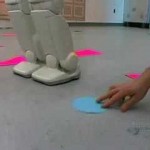
Autonomous navigation is one of the most challenging parts of building a robot and especially, if it is a humanoid robot you are dealing with, things easily get much more difficult. Of course, real world conditions involve changing environments as well. Researchers at Carnegie Mellon University, were able to come up with an algorithm that enables Honda’s famous humanoid robot Asimo to walk through a […] Read More

Robot putting itself back together -

University of Pennsylvania researchers have developed a modular robot that can separate at predetermined locations on impact, and then put itself back together again. The robot’s basic unit that can separate from other pieces include one camera and four sections, and it can move by itself. Each of these modules contain four circuit boards and a motor. The connection between the modules are either magnetic […] Read More

Artificial Brain 10 years away – expert -

The Blue Brain project at Swizerland’s EPFL was launched in 2005, is looking into reverse engineering of the human brain.The team has been picking apart the sturcture of the neocortical column since 15 years and indexing all the types and shapes of connections, icluding their functionality, describing their rules of communication. The project is at the stage of constructing an artificial neocortical column, which has […] Read More

Very strong artificial muscles created -

At University of Texas Nanotech Institute, Scientists have created an artificial muscle that runs on alcohol and has the ability to generate strong forces in a short period of time. These muscles use chemical fuels instead of battery energy. The muscles use methanol, which has 30 times the energy storing capacity of a conventional battery. The nickel-titanum alloy coated in platinum particles, which are only […] Read More