Robotics News, Knowledge & Insight since 2008

Robotics

Setting equations for AI to have common sense -

To develop some kind of common sense for AI has always been the ultimate goal of AI research, ever since the first computers appeared about 60 years ago. Recently the increase in computing power reaching to sufficient levels, along with a greater number of new research projects on the subject are paving the way for such goals to be achieved. One such project has recently […] Read More

Robot flies by flapping wings -

The flying robot developed in Holland is able to stay and move in the air just by flapping its wings like a dragonfly. The robot just weighs 16.04 grams and it has 30 cm maximum dimension at its height. It is able to stay afloat for 8 minutes while flying with speeds ranging from 0.5 m/s to 15 m/s. Vertical climb, vision based stabilization, beyond […] Read More

Bear: Battlefield Extraction Assist Robot -

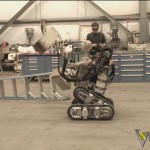
Robots that are designed to carry loads in environments where human can not enter safely are definitely needed everywhere, especially in the battlefield. Bear (Battlefield Extraction Assist Robot) developed by Vecna Robotics, is a highly capable semi humanoid robot, which is able to carry loads and humans up to 500 pounds (227 kg) and for long distances. Although primarily considered as a military robot, BEAR […] Read More

I-Cub -

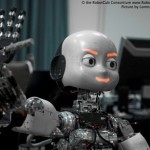
ROBOT NAME: iCUB CATEGORY: Humanoid MADE BY: European Commission through its Cognitive Systems and Robotics Unit. INTRODUCTION: RobotCub is an open source humanoid robot project funded by European Commission through its Cognitive Systems and Robotics Unit. The project started in september 2004 with a total duration of 60 months. There are ten research centers in Europe, three in USA and three in Japan is contributing […] Read More

Developing robot insects -

By analysing the shape of the wings of flying insects during flight, through the use of flight simulators, researchers at Oxford University tracked the flow of smoke particles over the insect wings, in order to understand the air flow. This led to an in depth analysis of the wing motion. The research can have many applications in military as well as entertainment, by allowing to […] Read More

ABB and Vincennes University Partner to Enhance Robotic Training -

AUBURN HILLS, Mich. (September 28, 2009). ABB Robotics, a leading supplier of industrial robots, and Vincennes University (VU) have formed a partnership that will greatly enhance the Indiana college’s vocational and technical robotic training, and provide ABB with an authorized training facility in the central Midwest. The partnership includes the installation of 29 ABB robots and related work cells, software and controllers into VU’s new […] Read More

Scientists can read your mind -

According to a report published in Current Biology, scientists are able to tell what number or how many dots a person has just seen, by measuring the brain activity with fMRI. The study may also help to discover how the brain makes more sophisticated calculations, according to the researchers. Reference: www.sciencedaily.com/releases/2009/09/090924123306.htm Read More

Progressing with artificial hands -

Making a working artificial hand has always been a great challenge in medicine. Even until now, most amputees without arms have to make use of hooks in place of their hands. Recently however, technology seems to get close to making a really functioning artificial hand. The artificial arm is called the DEKA arm, which is part of a $100 million Pentagon program under the direction […] Read More

Pool playing robot -

Students at Queen’s University of Canada, have been developing a pool playing robot since three years, using standard off the shelf components, and the robot is already able to play better than amateur level human players. The team also developed an “augmented reality” mode, which projects the possible trajectory of the balls by using a projector and a camera located above the table. Currently the […] Read More

Ball juggling robot -

The robot developed by Swiss Institute of Technology is able to juggle a ball without sensors, just by the mechanical feedback from the bouncing ball, and mathematical calibration of the machine, without using any sensors. The two variables, the force that the ball exerts on the tray (therefore the height of ball bounce) and the location which the ball hits the tray are constantly measured. […] Read More