Robotics News, Knowledge & Insight since 2008
Androids
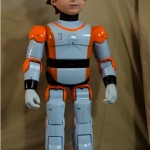
His name is Diego-san and he is an android infant developed by the Institute for Neural Computation’s Machine Perception Laboratory, based in the UCSD division of the California Institute for Telecommunications and Information Technology (Calit). The lab is funded by the National Science Foundation. For the hardware, the lab collaborated with Kokoro Co. Ltd. and Hanson Robotics specialized in building life-like animatronics and androids. Taking a year old baby as a model, the head was designed by Hanson Robotics which sells a line of expressive robots called Robokind. There were some other projects between the Machine Perception Lab and Hanson Robotics in the past, as well, such as the emotionally […]
Read More
University of Zurich Artificial Intelligence Lab is trying to give birth to a humanoid robot boy, called Roboy, which is actuated by tendons mimicking human muscles. It is a smaller counterpart to Kenshiro Humanoid Robot, about which we had made a news entry just recently. It is an upgrade version of the ECCE robot, which was built a few years ago, but apart from its muscles and body resembling human anatomy, the previous one was looking “less human”. Roboy has a much more attractive and friendly looks in our opinion – first of all the appearance of the head was chosen with user votes on facebook. It has a height […]
Read More
As in any field we can think of, robots are slowly but surely gaining their place in our classrooms too. Use of robots in classrooms has benefits for many reasons. First of all, it is a very effective way of introducing students to mathematics, engineering and science, in addition to Robotics, which can be considered as the next most popular field in education in the years to come. One good example of these robots, is the NAO Robot from Aldebaran Robotics, a company based in France. NAO is a 57 cm tall robot with 25 degrees of freedom, running on Choregraphe software, and is one of the most frequently used […]
Read More
Under its Maximum Mobility and Manipulation (M3) program, DARPA is trying to achieve advances in robotics that will enable better design and fabrication of robots, which will have enhanced mobility and manipulation in natural, undefined environments. Another goal is improve the capabilities of robots by better design tools, fabrication methods and control algorithms. More details about the program can be found here. By its DARPA Robotics Challenge (DRC) program, all these goals will be put to test. This is a competition where robotics companies will compete to come up with the best robot control system, in order to satisfy the requirements set by DARPA, for a better robot that can […]
Read More
Researchers at the University of Tokyo came up with an extremely humanlike robot. Called Kenshiro, the robot is 158 cm tall, weighs 50 kg and is supposed to resemble the body of a 12 year old male. The robot mimics 160 major muscles in the human body which is the biggest number achieved in a robot so far. In making the robot, the researchers tried to mimic the weight and muscle ratio of human body including the muscle torque and joint speeds. The actuation is done by muscles working as a pulley system. Few years ago we had made a news entry in Robotic Magazine which was talking about a […]
Read More
27 inch tall Zeno, one of Hanson Robokind latest humanoid robot creations, has been built on several years of research and promises potential. Zeno’s has a total of 36 degrees of freedom, weighs 5.7 kg and is 69 cm tall. The robot is capable of having conversations that shows compassion and provides help with education or helping learning of disabled children. Zeno is particularly useful in providing a research platform to robotics researchers for an affordable price. The walking talking robot can also have millions have possible facial expressions. The android’s eyes has high definition cameras which can move to make facial expressions as well as moving independently. This is […]
Read More
Since the advent of robotics, the scientists have befuddled over the possibility of inventing a robotic hand that can perform the same tasks as a human. The researchers at Sandia National Laboratories have taken steps to replicate the original structure of human hand in their new four-fingered robots. The design is made of high quality plastic. It is a fully functional robotic hand that is capable of doing menial as well as complex tasks with little problem.Apart from its high quality and ability to perform elegantly, the main advantage of the hand seems to be the number of degrees of freedom it has, which is 12, versus its cost, […]
Read More
http://www.bbc.com/news/technology-19506130
Read More
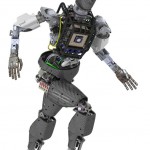
The world of Asimov’s i-Robot may be just around the corner thanks to DARPA’s new robotic challenge. Details of the Defense Advanced Research Projects Agency’s new $2 million challenge have been unveiled, revealing a highly ambitious project aimed at developing sophisticated, humanoid robots capable of doing tasks that, to date, only humans have been able to carry out. The challenge is aimed at finding humanoid robots capable of replacing soldiers and rescue workers in dangerous and hospitable locations. DARPA intend to fund 6 hardware and 12 software teams who can produce a robot that can not only do human type tasks, but can also use tools, drive vehicles and physically traverse […]
Read More
In a research study done by University of California San Diego, human brain reaction to the humanoid robots’ human appearance vs. their human-like movements have been examined. The study was led by Ayse Pinar Saygin, an assistant professor of cognitive science at UC San Diego and alumna of the same department. According to Saygin, the brain is not necessarily looking for biological movement however when it sees a biological looking robot behaving differently, that is where it is confused, as the expectation is not met in that case. The research team used 20 subjects, between ages 20 to 36, who had not spent time with robots before. For more detail […]
Read More